As the social shift towards ‘protecting your peace’ grows, have we lost the art of being a good friend? Boundaries are obviously important, but so is showing up and being there for someone when they need it most (even if it’s a little inconvenient).
Nowadays, even when we do get together, catch-up culture has turned coffee dates into mini interviews. We go around the table, lattes in hand, ticking off life updates to keep everyone in the loop: “Job’s alright… yeah the holiday was really fun… you got any nice birthday plans?”. Meanwhile, the real stuff, like the messy chaos of doing life together gets pushed to the side and forgotten about.
Relationship expert, Sophie Personne, sums this up, stating: “There’s been a shift towards a more individual ‘me first’ mindset. People are prioritising themselves as well as their time, energy and peace, which means friendships take more of a back seat.” She goes on to explain that while protecting your peace isn’t inherently wrong, “the balance is knowing the difference between something that genuinely drains us and something that just requires a bit of effort.”
So, in what ways are we falling short as friends? And what actually makes people feel valued in friendships? We surveyed 1,000 Brits to find out! (Spoiler alert: if you want a village, you’ve got to be a villager).
What do friendships look like today?
First, let’s take a quick look at what friendships look like today. From our survey, we found that most people (17%) have a few separate friends that they don’t see often, while 16% have separate friends that they see much more regularly. Meanwhile, 15% have a solid group of friends that they see most of the time.
Gender differences reveal some interesting patterns too, with men being more likely to have a solid group that they see regularly (20%), compared to just 10% of women. Women, however, are more likely to have multiple groups of friends that they see often (12%). What’s more, women are also twice as likely to have one solid friend that they see regularly (10%), compared to 5% of men.
Overall, despite discussions around male loneliness, we found that men tend to see their friends more often than women do.
When friends let us down
Despite regular meetups, friendships aren’t always smooth sailing, and sometimes people let us down. This isn’t always in the dramatic, movie-style betrayal type of way, but in the everyday, disappointing moments like a missed call or a cancelled plan.
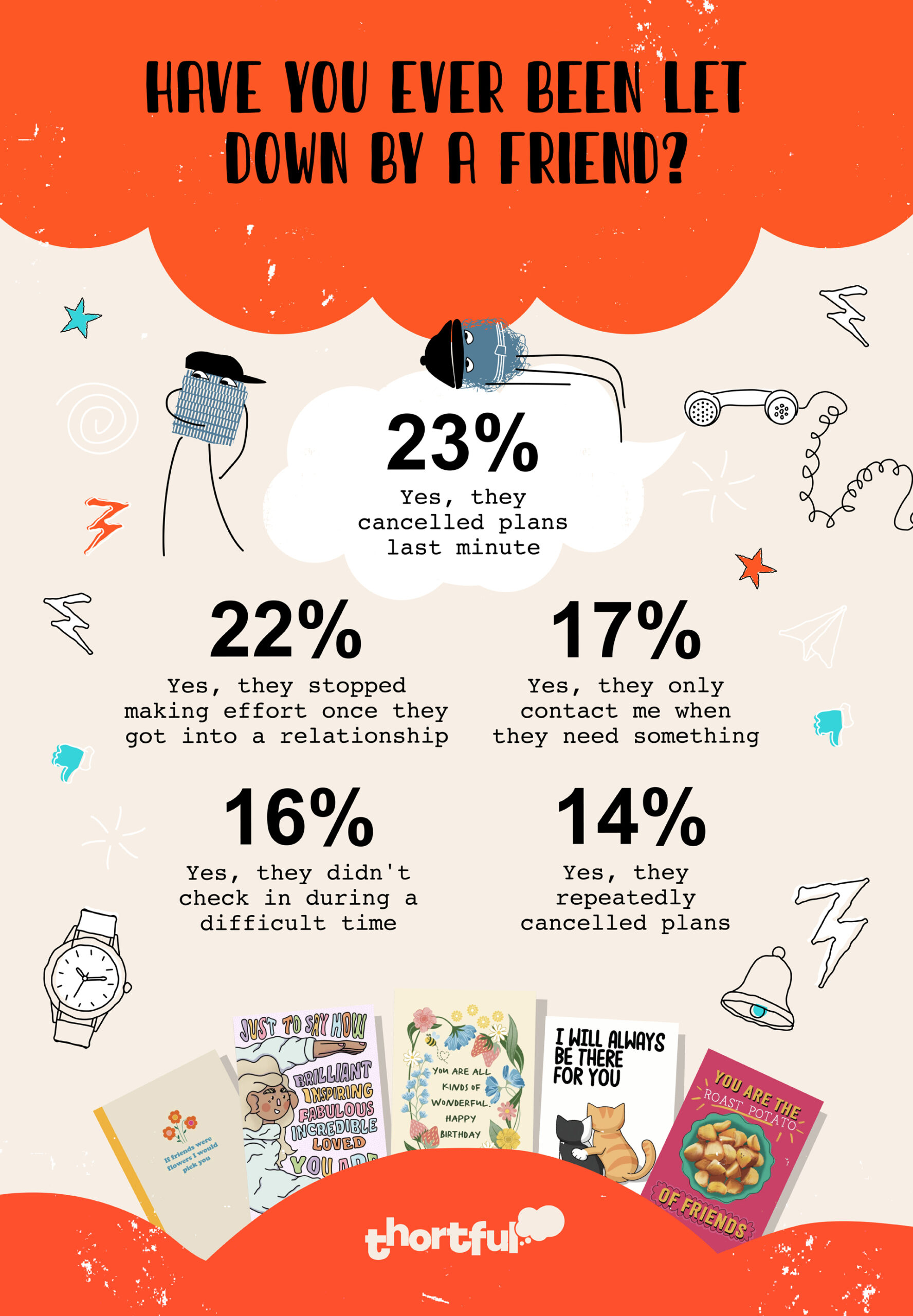
Our survey found that 23% of people have had a friend cancel on them last minute, with a further 14% mentioning that this happens pretty regularly. Around 22% also noticed that their friends have stopped making an effort with them once they get into a romantic relationship, prioritising spending time with their significant other instead.
In terms of showing up when it matters most, 16% said that their friends often fail to check up on them, with a similar number mentioning that their friends only ever check in when they need something.
Interestingly, men and women are almost equally guilty when it comes to letting friendships slide after entering a relationship (22% of women and 21% of men admit to this), however, we found that women report feeling let down slightly more in general.
We’re not saying that friendship needs to be perfect all of the time, but across the board, it does look like we could be doing more to show up for our pals when they need us.
What makes us feel valued in a friendship?
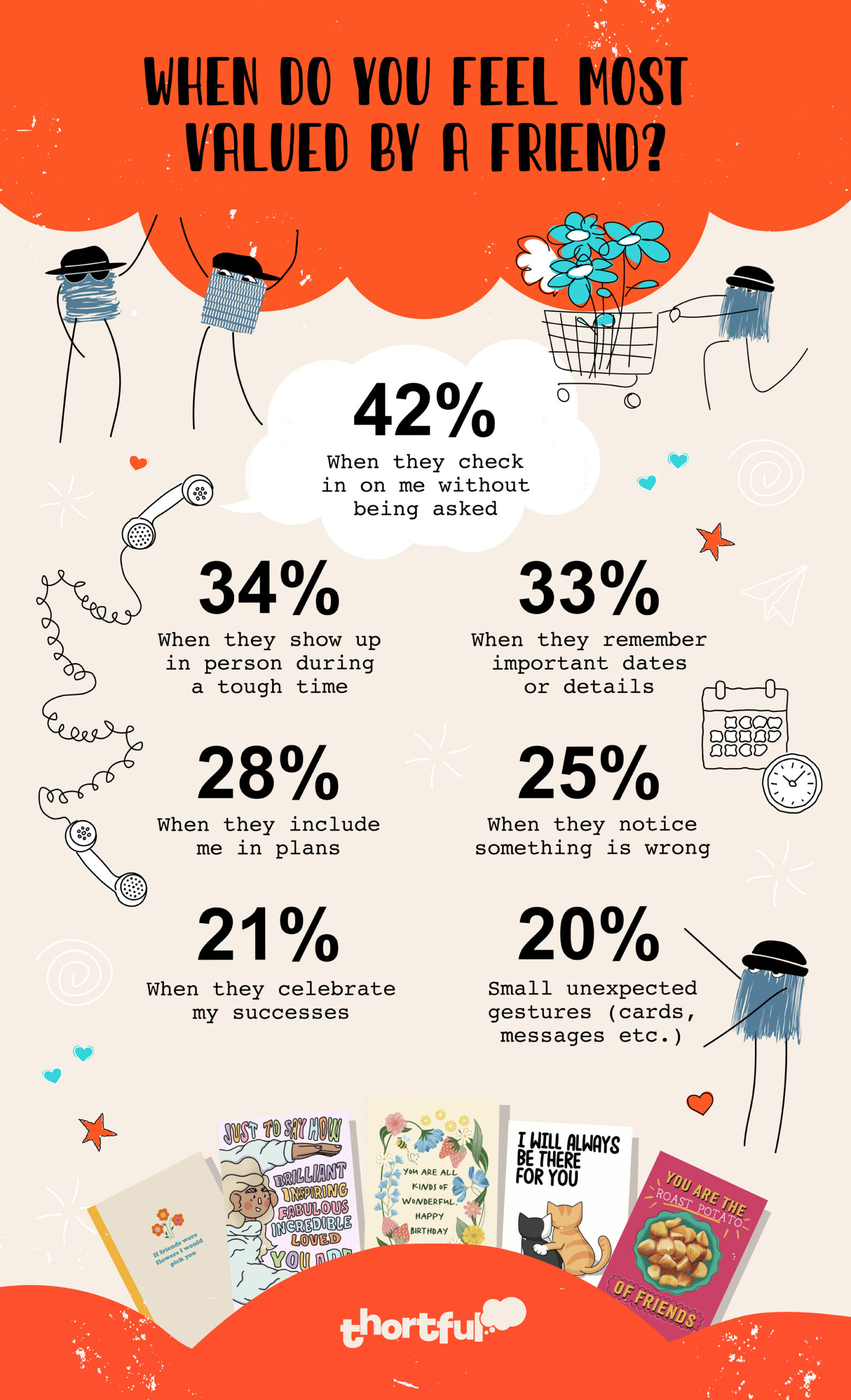
On the flip side, let’s dive into the things that make us feel the most valued as a friend. Most people (42%) feel valued when a friend checks up on them, with 34% mentioning the importance of being there during trickier times. Remembering the little details is also important, with around a third of people mentioning that they feel valued when friends remember birthdays, coffee orders, and other significant dates.
Being thought of and included in plans makes 28% feel valued, while 25% feel loved when a friend notices that something is wrong. We found that celebrating successes together matters too (21%), as well as small, unexpected gestures, like a message or a surprise friendship card through the post (20%).
Interestingly, face-to-face interactions make men feel the most valued, with 18% favouring physical presence rather than texting. Women, on the other hand, feel the most valued through thoughtful gestures: 44% said that they feel loved when a friend checks in on them, and 36% appreciate it when a friend remembers something.
While the survey tells us what people value, Sophie explains how we can put these habits into practice. She says that while “connection used to happen naturally through daily life, we now have to be more intentional with it.” From this, she offers some simple ways in which we can show up for our friends:
- “Replying to a message – if it takes someone a week to get back to you, you start to switch off.”
- “Sending a card for no reason – it’s not much but it takes thought and effort, especially nowadays when so little gets sent in the post.”
- “Being present when you do see them – you might think you can multi-task, but they know when attention isn’t on them.”
She wraps things up by saying that these small things aren’t just nice to have, they’re actually what keeps the relationship alive.
Where do we slip up?
It’s easy to point fingers when a friendship fizzles out, but sometimes the cracks might start on your side, often without you even realising it. With this in mind, we did some more digging and asked our participants to have a think about their own efforts. Here’s what cropped up:
- 20% said that they’ve regularly prioritised a partner over their friendships
- 18% have ignored messages from their friends
- 16% have forgotten an important event
- 16% have avoided having difficult conversations
Sophie adds that while “we don’t like to admit it, we can outgrow some friendships. So, the real question here is whether the relationship has slipped down the priorities list because it doesn’t mean as much to us anymore.”
On the other hand, while some friendships are just for a season, others could thrive again with the right amount of effort from both sides. So, friendships still need you to show up, even when it might feel a little uncomfortable or inconvenient.
How to be a villager: Key takeaways
With the above insights in mind, how can you leave catch-up culture in the past and start living shared lives with your mates again?
First thing’s first, nurturing your friendships is all about showing up in small, meaningful, everyday ways. So, next time your friend pops into your head, give them a call or send them a rambling voice note about your day. And that random Saturday afternoon errand you’ve got to run? Ask them if they want to join. Invite them over for dinner, watch a movie together, or have an impromptu picnic in the park. The connections you’ll make are definitely worth that little bit of extra effort.
Finally, if you’re looking for more insights, you’ll find plenty over on the thortful blog (think lifestyle guides, special occasion inspiration, and much more). There you can read about how to help a friend through a breakup and how to keep in touch with long distance friends!